When a drain or sewer line clogs again and again, a cable snake often is not enough. A snake punches a hole through a blockage, which restores flow for a while, but it leaves the grease, scale, and root debris coating the pipe walls, and the line clogs again once that buildup catches the next round of waste. Hydro jetting takes a different approach: it uses high-pressure water to scour the inside of the pipe clean, removing the buildup itself rather than just poking through it.
ServiStar Plumbing and HVAC is a locally owned, owner-led plumbing and HVAC company at 13351 Riverside Dr Suite #414 in Sherman Oaks, CA 91423, with more than 30 years of experience and a 4.8-star rating across 140+ Google reviews. The company is CSLB licensed (#885156), bonded, and insured. This article explains how the process works, when it is the right tool, and why it suits the drains and sewer lines in this area. Every line is different, so treat this as background rather than a substitute for an on-site diagnosis.
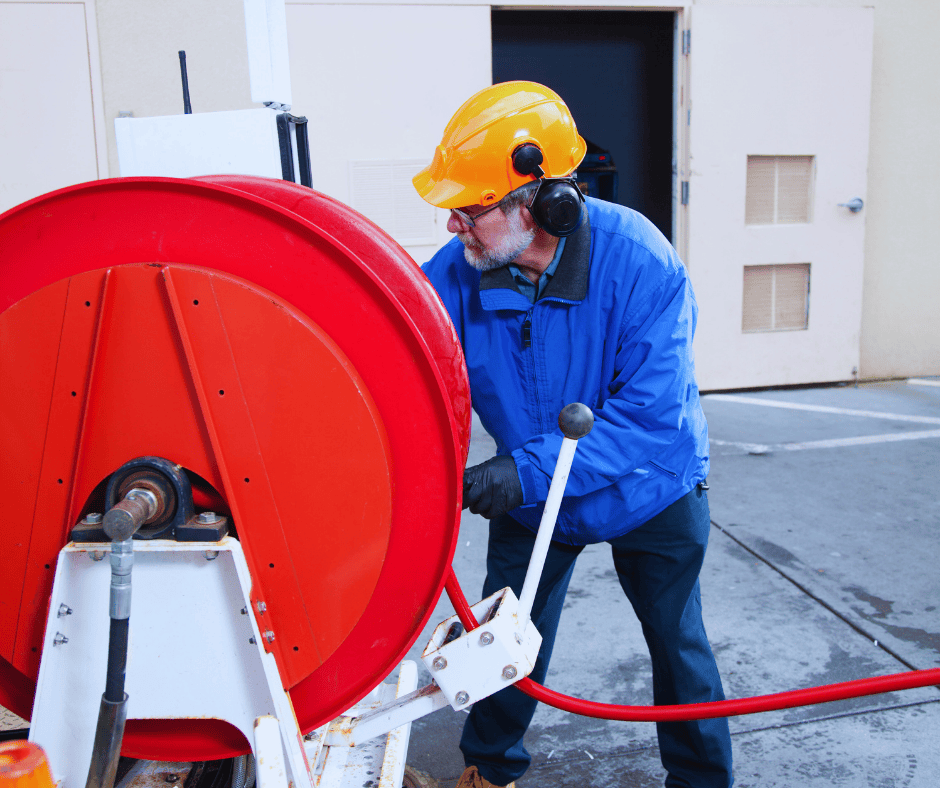
Hydro jetting sends a specialized hose down the line with a nozzle that directs high-pressure water forward to cut through the blockage and backward to scour the pipe walls and propel the hose along. The forward jets slice through grease plugs and root masses, while the rear jets strip the accumulated grease, scale, and sludge off the walls and flush it all downstream. The result is not just an opening through the clog but a pipe restored close to its full interior diameter.
That is the key difference from cabling. A snake is a mechanical tool that breaks through or hooks out a blockage, which is exactly right for some clogs, but it does not clean the pipe walls. Hydro jetting cleans the whole interior surface, which is why a jetted line tends to stay clear far longer than a snaked one. For a Sherman Oaks home or business with recurring clogs, that difference between clearing and cleaning is what makes jetting worth it.
A snake restores flow by punching through a blockage, but hydro jetting scours grease, scale, and root debris off the pipe walls, which is why jetted lines stay clear far longer.
The City of Los Angeles runs a FOG Control Program governing how food service establishments manage fats, oils, and grease, so a grease-packed kitchen line is both a clog risk and a compliance concern.
Hydro jetting cuts through compacted tree-root masses in sewer laterals that a cable snake can only bore a narrow hole through, clearing much more of the obstruction.
Neither tool is universally better; each fits different situations. A cable snake is often the right first move for a simple, isolated clog, a single fixture backup, or a line where the pipe condition is unknown and a gentler approach makes sense. Hydro jetting is the stronger choice for heavy grease, compacted root balls, years of accumulated scale, and lines that clog repeatedly despite being snaked, because it removes the underlying buildup instead of just the current blockage.
The decision also depends on the condition of the pipe, which is why a camera inspection often comes first. A sound pipe with heavy buildup is an ideal candidate for jetting, while a pipe that is cracked, badly corroded, or collapsing may need a different plan. ServiStar inspects the line, chooses between snaking and hydro jetting based on what the camera shows, and explains the reasoning, so the method matches the actual problem rather than applying one tool to every job.
Two local realities make hydro jetting especially useful here. The first is tree roots. Sherman Oaks was laid out with wide, tree-lined streets, and the mature ficus, oak, and sycamore that shade the neighborhood send roots into sewer laterals through joints and cracks, forming dense masses a cable can only partly cut. High-pressure water slices through compacted root balls that a snake would just bore a hole in, clearing far more of the obstruction.
The second is grease, especially along the Ventura Boulevard restaurant corridor. Kitchens push fats, oils, and grease into their lines at a volume no home produces, and that grease hardens on pipe walls into blockages that a cable cannot remove. High-pressure jetting is built for exactly this, stripping hardened grease off the walls and flushing it away. Between root intrusion on residential laterals and grease in commercial lines, jetting addresses the two most stubborn clog sources in the area.

For Sherman Oaks restaurants, grease is both a clog risk and a regulatory one. The City of Los Angeles runs a FOG Control Program, short for fats, oils, and grease, that governs how food service establishments manage grease discharge. Kitchens are expected to follow best management practices and maintain grease interceptors, and a line packed with hardened grease is both an operational failure waiting to happen and a compliance concern for the business.
Regular cleaning of commercial kitchen lines keeps grease from reaching the point of a blockage or a violation. By stripping the grease off the pipe walls before it accumulates into a plug, a restaurant keeps its drains flowing and stays on the right side of the city's expectations. For a food service business on Ventura Boulevard, scheduled jetting is part of running the kitchen properly, not just a reaction to a backed-up line during dinner service.
A fair question homeowners ask is whether high-pressure water can damage a pipe. On a sound line, jetting is designed to clean without harming the pipe, which is why the condition of the pipe is assessed first. The pressure and nozzle are matched to the line and the blockage, and a camera inspection beforehand confirms the pipe can take it. This is exactly why jetting is not a blind, one-size operation but a method applied after the line has been evaluated.
On a pipe that is already cracked, badly corroded, or collapsing, a different plan is called for, and a responsible contractor will say so rather than jetting a line that needs repair. That is the value of inspecting first: it protects the homeowner from having an aggressive cleaning done on a pipe that cannot handle it. ServiStar checks the line before jetting, so the method is used where it helps and avoided where the pipe needs a repair instead.
The main advantage of hydro jetting over snaking is how long the line stays clear afterward. Because jetting removes the buildup coating the pipe walls rather than just opening a channel through it, there is far less material left to catch the next round of waste. A snaked line with heavy grease or scale can clog again within weeks, while a properly cleaned line often stays clear for far longer, which changes the math on repeated service calls.
That durability is why jetting frequently costs less over time even though a single visit does more than a quick snaking. For a home or business that has been calling for the same clog again and again, one thorough cleaning that actually removes the buildup can end the cycle. A Sherman Oaks property owner tired of recurring backups often finds that a thorough jetting solves what repeated snaking only postponed.
There is a real difference between calling for a jetting when a line has already backed up and scheduling it before that happens. On a line known to accumulate grease or catch roots, periodic preventive cleaning keeps the buildup from ever reaching the point of a full blockage. That means no sewage backing up into a home, no kitchen shut down mid-service, and no emergency rate, just a maintained line that keeps flowing.
For properties with a history of clogs, this preventive approach is usually the smarter spend. A scheduled cleaning on a sensible interval costs less and causes less disruption than an emergency call after a backup, and it keeps the property owner in control of the timing. ServiStar can recommend an interval based on what the camera shows and how quickly a particular line tends to load up, turning a recurring emergency into a routine bit of maintenance.

Jetting serves both the aging residential laterals and the busy commercial lines around Sherman Oaks, though the specifics differ. On a home, the usual targets are root intrusion in the sewer lateral and years of accumulated buildup in kitchen and main lines. On a commercial property, it is grease in restaurant lines, high-volume waste in multi-tenant buildings, and grit and debris in retail floor drains. The tool is the same; the application is scaled to the property.
A contractor who handles both sides brings the right equipment and the right approach to each. A home lateral and a restaurant grease line are different jobs, and matching the pressure, the nozzle, and the schedule to the situation is what makes the cleaning effective without stressing the pipe. ServiStar works across residential and commercial lines in Sherman Oaks, applying high-pressure cleaning where it fits and pairing it with camera inspection so the result is verified either way.
Running a camera before and after sets professional cleaning apart from a blind blast of water. The pre-inspection shows what is in the line, how far down it sits, and whether the pipe can take the cleaning, which is what makes the method safe and targeted. The post-inspection confirms the line is genuinely clean rather than just flowing again, giving the property owner a verified result they can see on the screen.
That before-and-after footage also builds a record of the line's condition, which is useful for planning future maintenance or spotting a developing problem early. For a Sherman Oaks homeowner or business, pairing the camera with the cleaning turns a one-time fix into part of understanding the plumbing over time. It is the difference between guessing that a line is clear and knowing it is, which is exactly what a property owner is paying for.
Certain patterns tell a property owner that a line has moved past what snaking can solve. A drain that clogs again within weeks of being cleared, several fixtures slowing at once, gurgling that keeps returning, and recurring odors all suggest buildup coating the pipe walls rather than a single obstruction. When snaking gives only brief relief before the problem comes back, the buildup itself is the issue, and that is where a thorough cleaning is warranted.
Commercial kitchens have their own tells: floor drains that back up during busy service, a persistent grease smell, and lines that need clearing more and more often. These are signs that grease has accumulated to the point where mechanical clearing is no longer keeping up. Recognizing the pattern early lets a Sherman Oaks property owner switch from repeated quick fixes to a cleaning that actually resets the line, which usually ends the cycle of callbacks and keeps the drains reliable.
The underlying point is that a line clogging on repeat is sending a message. Rather than paying for the same snaking over and over, reading those signs and moving to a proper cleaning addresses the cause. For a home or a business in Sherman Oaks, knowing when a line has outgrown the snake is what turns an ongoing nuisance into a solved problem.
Jetting rewards a licensed local team that inspects first and matches the method to the line. ServiStar Plumbing and HVAC is CSLB licensed (#885156), bonded, and insured, locally owned with more than 30 years of experience, and rated 4.8 stars across 140+ Google reviews. The company inspects the line with a camera, clears it with hydro jetting or cabling as the situation calls for, verifies the result, and prices the work upfront with no hidden fees, with same-day and emergency response when a line cannot wait.
A Sherman Oaks home or business with a stubborn or recurring clog can arrange hydro jetting in Sherman Oaks by calling (818) 864-0117. ServiStar serves Sherman Oaks and the surrounding San Fernando Valley and Los Angeles communities including Encino, Studio City, Van Nuys, and beyond. Because every line and blockage is different, an on-site camera inspection is the right way to confirm the cause and choose the method that clears it for good.
Redirect to:
|
This page is a redirect. The following categories are used to track and monitor this redirect:
|