What Professional Attic Cleaning Involves and When It Pays Off
Most homeowners never think about the attic until something forces them to: a scratching sound overhead, a smell that will not clear, a pest inspection flagging droppings, or a sale that puts the whole house under a microscope. At that point the question becomes what professional attic cleaning actually involves and whether it is worth the cost. The short answer is that proper cleaning is far more than sweeping out dust. It is a structured process of removing contaminated material, cleaning and sanitizing the space, and closing off whatever let the problem in, and in a lot of older Los Angeles homes it pays off in both health and comfort.
San Fernando Valley and Greater Los Angeles housing stock makes this a common need. A large share of homes in Northridge, Reseda, Van Nuys, and the surrounding neighborhoods were built between the 1950s and the 1980s, with original venting that was never re-screened and insulation that has collected decades of dust and, in many cases, rodents. Understanding how a real attic cleaning company approaches the work helps a homeowner judge whether a quote covers the whole job or just the easy parts.
Attic air and house air mix more than you think
Attics connect to the living space through gaps around recessed lights, vents, and wiring, so contaminants overhead get pulled into bedrooms and living rooms whenever the heating or cooling system runs. That is why a dirty attic affects indoor air quality and why cleaning it is a health measure, not just housekeeping.
The CDC warns against sweeping rodent waste
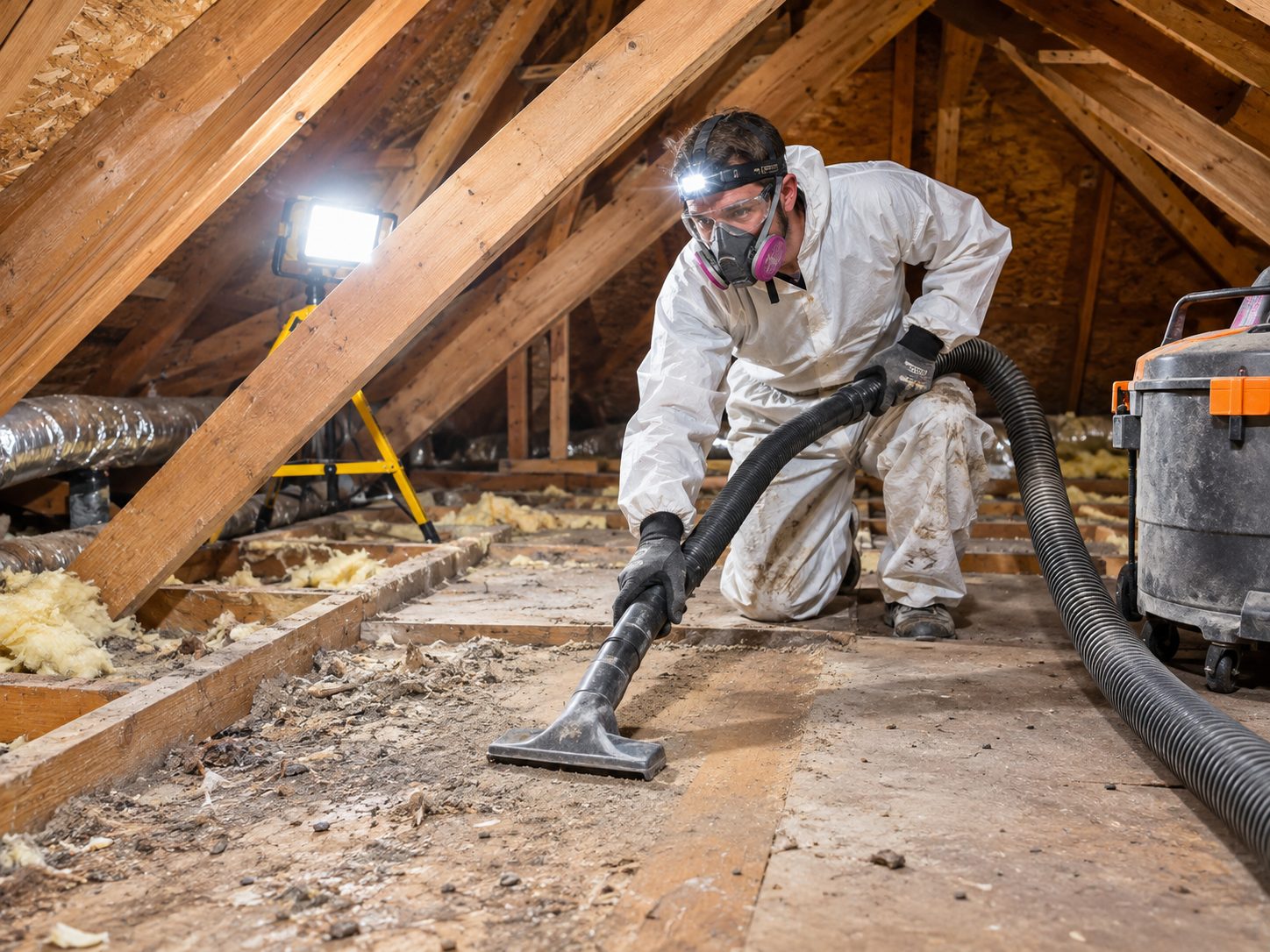
Dry sweeping or vacuuming rodent droppings can send particles into the air, which is why the Centers for Disease Control recommends wetting and treating the material first. Professional attic cleaning uses filtered extraction, containment, and protective equipment to keep those particles out of the air a family breathes.
Order of operations decides the result
Cleaning before removal spreads contaminants, sealing entry points before removing pests traps them inside, and new insulation over an unsanitized attic buries the problem. A thorough attic cleaning works the sequence in the right direction: inspect, remove, sanitize, deodorize, seal, then re-insulate.
Why Attics Get Dirty Enough to Need Cleaning
Attics accumulate problems slowly. Dust sifts in through vents and settles into the insulation for decades. Roof rats, endemic across Los Angeles County, find their way in through unscreened soffit and eave vents and nest in the warm insulation, leaving droppings, urine, and nesting debris behind. Birds and other pests add their own mess. Moisture from a roof leak or poor ventilation can let mold take hold. Over time the attic becomes a reservoir of allergens, pathogens, and odor sitting directly above the living space, connected to it through every gap around lights, vents, and wiring.
That connection is the reason attic cleanliness is not just cosmetic. Attic air and house air mix far more than homeowners assume, especially when the heating or cooling system runs and pulls air through the building. Contaminants in the attic get drawn down into bedrooms and living rooms. Families who deal with ongoing allergy or asthma symptoms indoors sometimes find that part of the cause is overhead, which is where professional attic cleaning and decontamination earn their place.
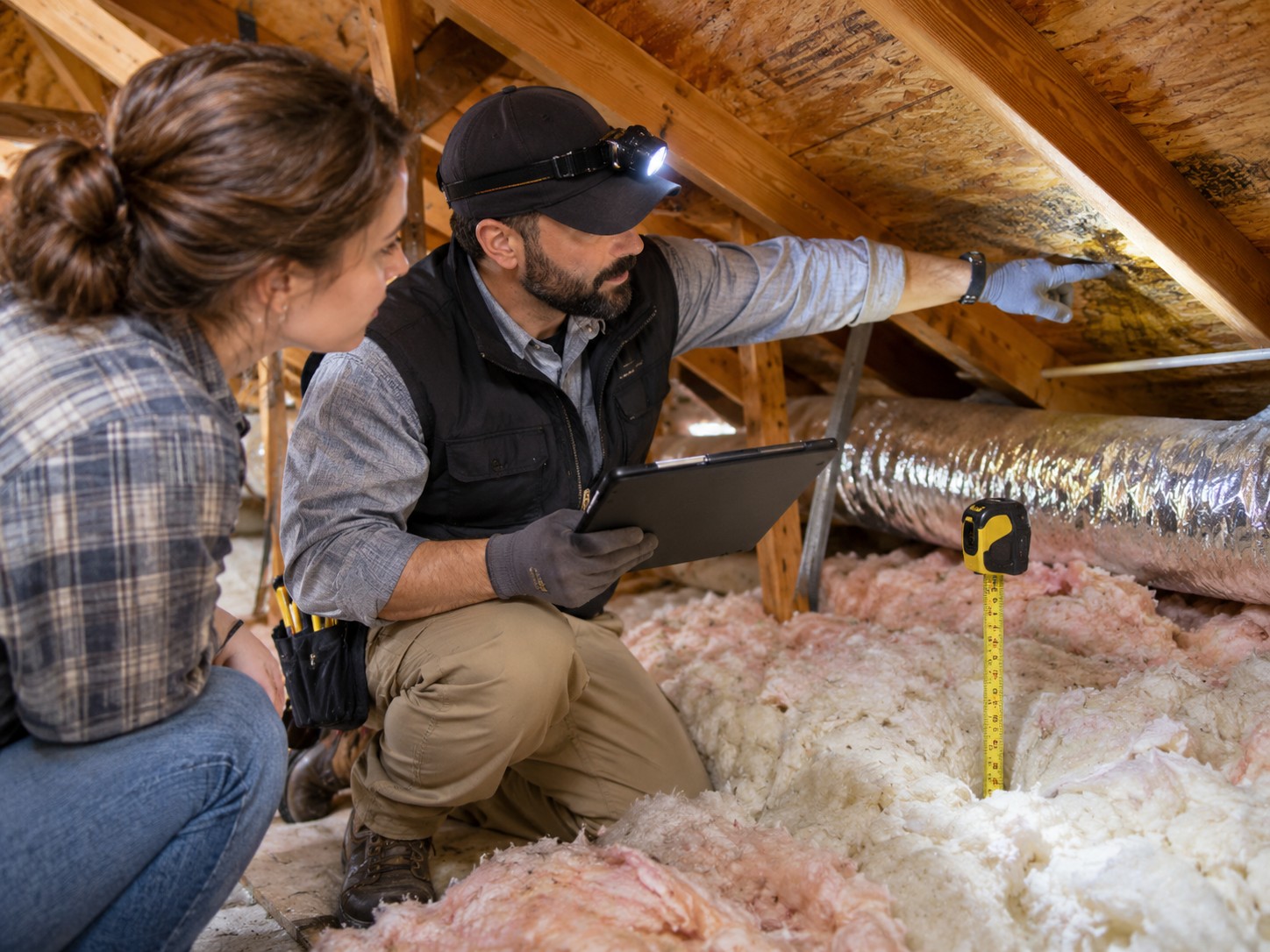
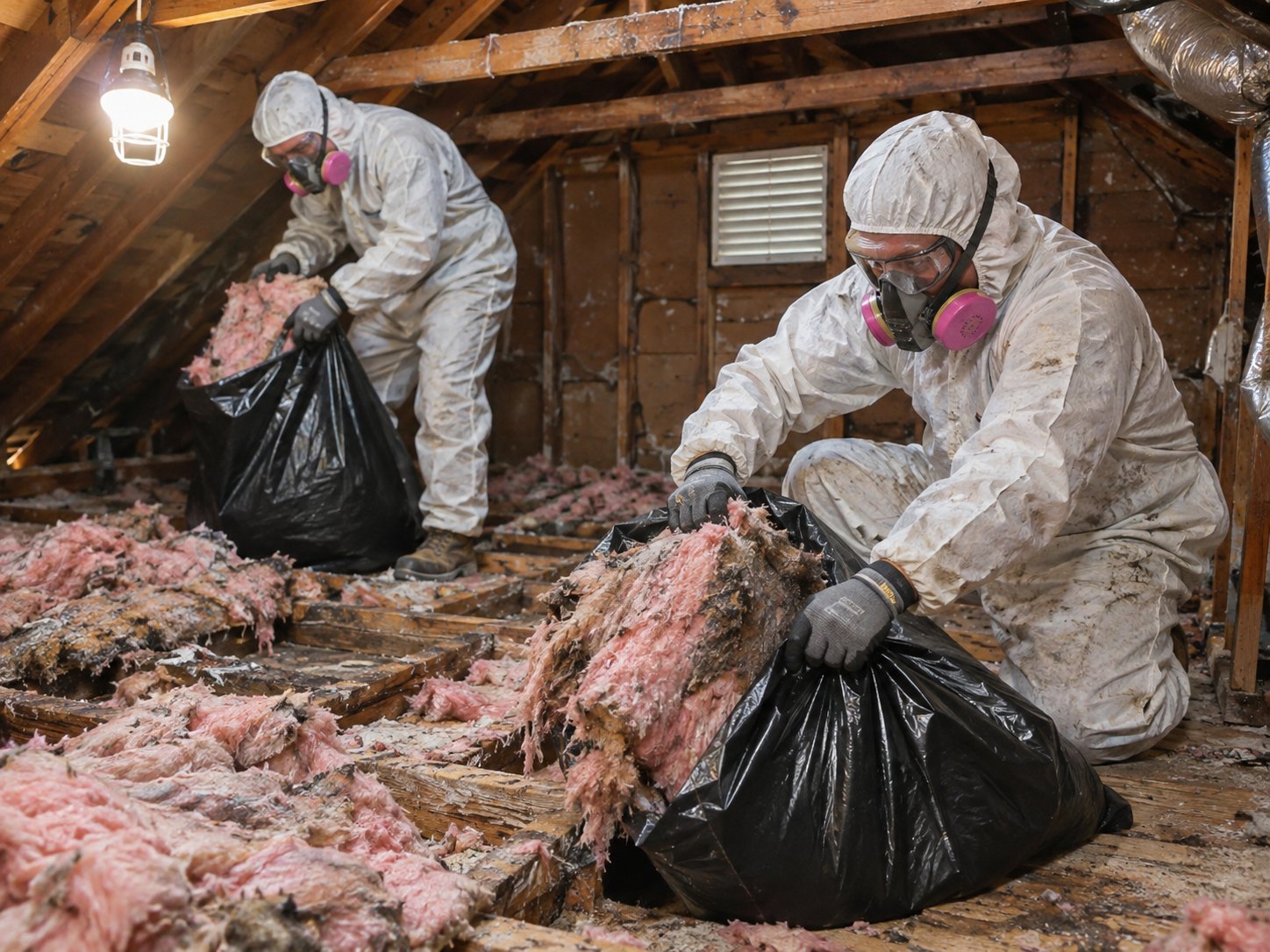
A thorough cleaning follows a sequence, and skipping steps is where cut-rate work goes wrong. It starts with an inspection to document what is in the attic: the condition of the insulation, evidence of rodents or other pests, moisture or mold, and the entry points that let pests in. From there the contaminated insulation and debris are removed, usually with commercial vacuums and sealed bags, so the mess leaves the house rather than being stirred into the air. Only once the space is cleared can the real cleaning begin.
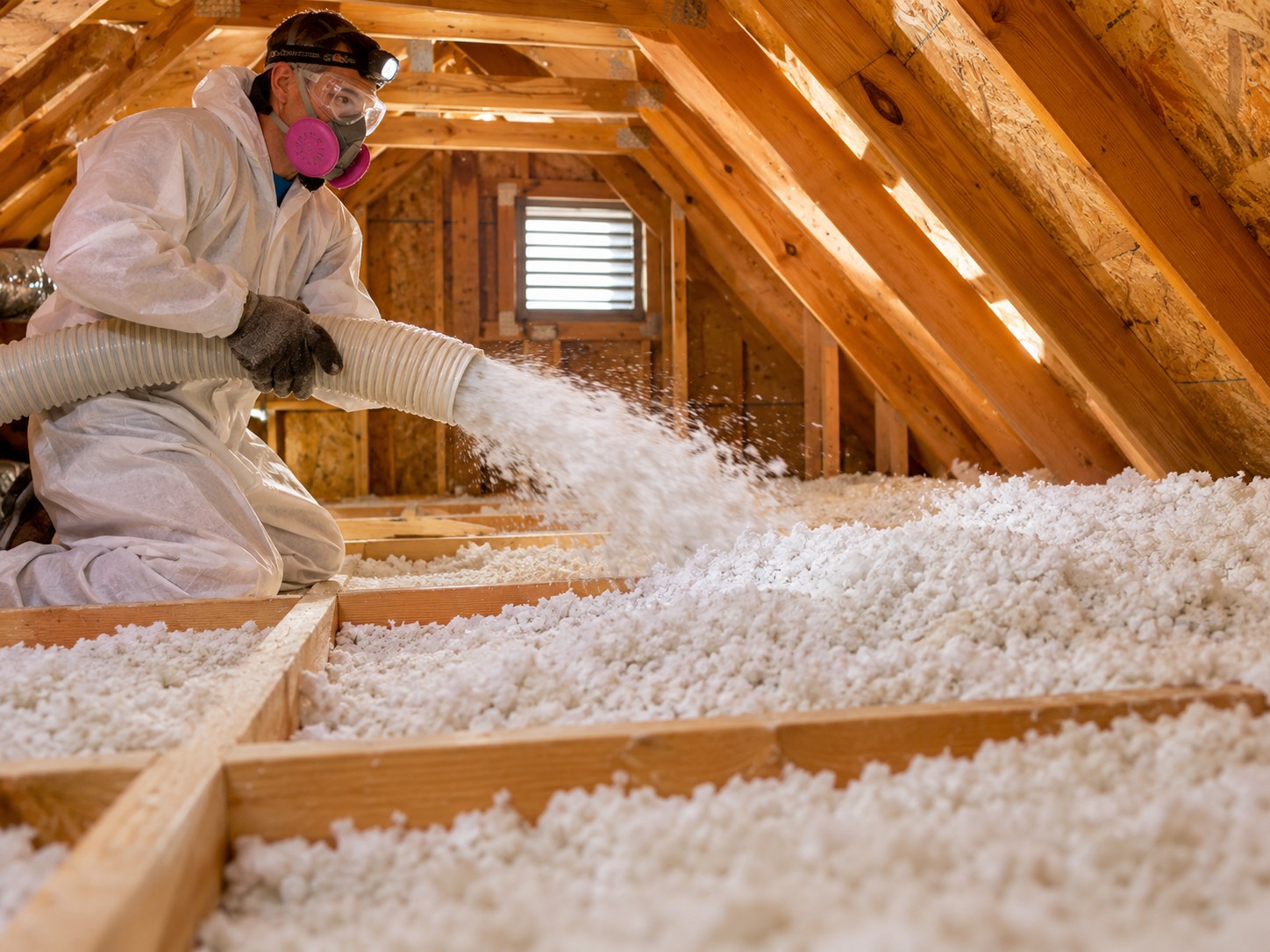
After removal, the attic surfaces are cleaned and sanitized to deal with the bacteria and allergens that rodents and dust leave behind, then deodorized to clear the lingering ammonia smell that urine produces. Where pests got in, the entry points are sealed so the problem does not simply return. Finally, if the insulation was removed, new insulation can be installed to bring the attic back up to standard. A full attic clean up service treats these as one connected job rather than a quick vacuum and a handshake.
Inspection and documentation of insulation, pests, moisture, and entry points
Removal of contaminated insulation and debris with vacuums and sealed bags
Cleaning and sanitizing of attic surfaces to reduce allergens and pathogens
Deodorizing to clear urine and nesting odor from the space
Sealing of rodent entry points and, where needed, new insulation
The order is not arbitrary. Cleaning before removal just spreads contaminants. Sealing entry points before removing the pests that are already inside traps them. Installing new insulation over an unsanitized attic buries the problem. A careful contractor works the sequence in the right direction, and a homeowner comparing quotes should check that each step is accounted for.
The Health Side of the Job
The reason attic cleaning is handled with vacuums, containment, and protective equipment rather than a broom is that disturbing dry rodent waste can send particles into the air. The Centers for Disease Control warns against sweeping or dry-vacuuming rodent droppings for exactly this reason, because the diseases associated with rodent contamination, including hantavirus, leptospirosis, and salmonella, are a real concern when waste is aerosolized. Proper decontamination wets and treats the material, uses filtered extraction, and bags everything for disposal, which keeps those particles out of the air a family breathes.
Allergens are the quieter health issue. Even without active disease, the dust, rodent dander, and mold spores in a dirty attic are common triggers for allergy and asthma symptoms, and they recirculate through the home every time the system cycles. Removing and sanitizing that material gives the indoor air a cleaner starting point. For households in Encino, Sherman Oaks, and Studio City with year-round symptoms that never seem to resolve, the attic is one of the places worth checking.
When Attic Cleaning Pays Off
Attic cleaning is clearly worth it in a few situations. After a rodent infestation, cleaning and decontamination are the only way to remove the health hazard and the smell. Before selling a home, a clean, documented attic removes a common inspection red flag and the price negotiation that follows one. When allergy or air quality problems persist indoors with no obvious cause, the attic is a logical suspect. And whenever insulation is being removed and replaced, cleaning the newly exposed attic is the natural time to do it, since the space is already open.
It is less urgent in a newer, well-sealed home with no pest history and no moisture problems, where a periodic inspection may be all that is needed. A trustworthy contractor will say so rather than manufacturing a reason to work. The honest framing is that attic cleaning pays off when there is contamination, moisture, pests, or an air quality problem to solve, and that a good inspection is what tells a homeowner which category their attic falls into.
Cost tracks the same factors as the work itself: attic size, the amount and type of contamination, access, and whether new insulation is part of the project. Because those variables are real, a fair quote comes from an inspection rather than a phone estimate, and it should arrive as a written scope. California requires a written contract for home improvement work over 500 dollars, and the California Contractors State License Board lets a homeowner verify any contractor's license before signing. Those two habits protect the homeowner regardless of which company does the work.
Rodent Proofing Is Part of a Real Clean
Cleaning an attic without closing the entry points is a short-term fix, because the rodents that were removed will be replaced by the next ones that find the same open vents. A thorough job pairs the cleaning with exclusion work, inspecting the roofline, soffits, eaves, and plumbing penetrations for the gaps that let pests in and sealing them with durable materials such as galvanized steel mesh and rodent-grade sealant. This is why a serious attic cleaning company treats proofing as part of the scope rather than an extra. The decontamination removes the problem that is there, and the exclusion keeps the next one out.
Los Angeles makes this especially relevant. Roof rats are a permanent part of the local environment, and the older housing stock gives them countless ways in. A clean attic in an unsealed home is an open invitation, so the lasting result comes from doing both halves of the work together. Homeowners who clean without proofing often find themselves calling again within a year, which makes the combined approach the better value even though it costs more up front.
What Sanitizing Actually Means
Sanitizing is more than spraying a cleaner around the attic. After the contaminated material is removed, the exposed surfaces still carry bacteria, allergens, and the residue of droppings and urine. Treating them involves applying products designed to break down that residue and reduce the biological load, then deodorizing to clear the smell that soaks into wood and framing. Done properly, sanitizing is what turns a cleared attic into a clean one, and it is the step that most directly affects the air the household will breathe afterward. A quote that lists removal but says nothing about sanitizing is describing half a job.
The distinction matters because odor is a reliable sign of incomplete work. An attic that still smells of ammonia after a cleaning was not fully decontaminated, because the urine residue that produces that smell was left behind. A homeowner can use that as a simple check on whether the sanitizing step was real. The goal is an attic that smells neutral, not one that has been masked with a fragrance over the underlying problem.
Documentation and the Real Estate Angle
A clean attic carries weight in a home sale, and documentation is what makes it count. Pest inspections during a transaction frequently flag rodent evidence in the attic, and an unaddressed finding becomes a point of negotiation that can cost a seller far more than the cleaning would have. A documented decontamination, with the entry points sealed and the work recorded, answers that finding before it becomes a problem. Sellers in the Valley and across Greater Los Angeles who deal with the attic ahead of listing often avoid the last-minute scramble and the price concession that a surprise discovery triggers.
The same documentation helps buyers. A household moving into a home with a history of rodents has good reason to want proof that the attic was cleaned and sealed rather than painted over. Records of the work, including what was removed and how the entry points were closed, give both sides of a transaction something concrete to rely on. This is one of the quieter reasons professional attic cleaning holds its value: the paperwork is as useful as the work itself.
How Cleaning Connects to Insulation and Air Quality
Attic cleaning rarely stands alone, because the conditions that make an attic dirty are the same ones that ruin its insulation. When rodents have contaminated the insulation, cleaning and insulation removal happen together, and the newly cleared attic is the natural moment to seal air leaks and install a fresh blanket at a current R-value. Handling it as one connected project avoids paying twice to open the same space and gives the home a clean attic and a working thermal layer in a single effort.
The air quality payoff ties the whole thing together. A clean, sealed, well-insulated attic stops feeding dust, allergens, and odor into the living space, which is the benefit a household actually feels day to day. For families that have fought ongoing indoor allergy symptoms, the combination of decontamination, sealing, and fresh insulation often does more than any single downstairs measure, because it removes the upstream source rather than filtering the result. That is the case for treating the attic as part of the home's air system rather than a forgotten space above it.
One practical note applies to every attic job: schedule the work when the household can keep the space clear and the crew can run hoses and containment without obstruction. Clearing stored items from around the attic hatch, confining pets, and planning for a few hours of noise all make the visit go faster and cleaner. These small steps do not change the scope, but they help the crew do thorough work and keep the disruption to the home brief.
Pure Eco Inc. provides professional attic cleaning and decontamination across the San Fernando Valley and Greater Los Angeles from 9740 Variel Ave in Chatsworth, under California contractor license number 993589 with HEPA-filtered removal and more than 20 years of local experience. A free attic assessment is available at (877) 870-7998. Homeowners researching a professional attic cleaning company can learn more from Pure Eco Inc..
About Chatsworth, CA
Neighborhood of Los Angeles in California, United States
Chatsworth is a suburban neighborhood in Los Angeles, California, in the San Fernando Valley. The area around the town was home to Native Americans, who left caves containing rock art. Chatsworth was discovered and settled by the Spanish beginning in the 18th century. The land was part of a Spanish land grant, Rancho Ex-Mission San Fernando. After the United States purchased the land following the Mexican–American War, it was the largest such grant in California. Chatsworth has seven public and eight private schools. There are large open-space and smaller recreational parks as well as a public library and a transportation center. Landmarks in the town include the former Chatsworth Reservoir and the Santa Susana Field Laboratory. The neighborhood has one of the lowest population densities in Los Angeles and a relatively high income level. Chatsworth is the home of the Iverson Movie Ranch, a 500-acre (202-hectare) area which was the most filmed movie ranch in history, as more than 2,000 productions used it as a filming location.
This section needs to be updated. Please help update this article to reflect recent events or newly available information.(January 2025)
The 2000 U.S. census counted 35,073 residents in the 15.2 square miles (39 km2) Chatsworth neighborhood, or 2,301 people per square mile, among the lowest population densities for both the city and the county. In 2008, the city estimated that the population had increased to 37,102. In 2000, the median age for residents was 40, considered old for city and county neighborhoods; the percentages of residents aged 35 and older were among the county's highest.[2]
The neighborhood was considered to be ethnically "moderately diverse" for both the city of Los Angeles and its county, with a relatively high percentage of whites and Asian people, and a sizable Hispanic/Latino community. The population was 65.7% Non-Hispanic White, 14.4% Asian, 13.5% Hispanic or Latin, 2.2% Black, and 4.2% of other origins. Among the 25.2% of residents born abroad - a low figure for Los Angeles - Korea (10.4%) and the Philippines (9.3%) were the most common places of birth.[2]
The median yearly household income in 2008 dollars was $84,456, considered to be a high income for the city. The percentages of families that earned more than $40,000 was considered high for the county. Renters occupied 28.9% of the housing stock, and house- or apartment-owners held 71.1%. The average household size of 2.6 people was considered average for Los Angeles.[2]
In 2000, there were 2,933 military veterans, or 10.8% of the population, a high percentage compared to the rest of the city. The percentage of married people was among the county's highest. The rate of 10% of families headed by single parents was low for the city.[2]
Chatsworth is flanked by the Santa Susana Mountains on the north, Porter Ranch and Northridge on the east, Winnetka, Canoga Park, West Hills on the south, the Simi Hills, and unincorporated Los Angeles County and Ventura County on the west, and Twin Lakes, a community founded by San Francisco's George Haight in the early 20th century and unincorporated Los Angeles County which includes a 1,600-acre park with equestrian trails, to the north.[3][4]
Chatsworth was inhabited by the Tongva, Chumash, and Tataviam. They inhabited the valley for an estimated 8,000 years. Stoney Point is the site of the Tongva village of Momonga, which was also a trading place with the neighboring Tataviam and Chumash people.[6] The nearby Burro Flats Painted Cave remains a legacy of the Chumash culture's rock art and solstice ceremony spirituality.[7]
The first European explorers came into the Chatsworth area on August 5, 1769, led by the Spanish military leader Gaspar de Portolà. With its establishment in 1797 and subsequent Spanish Land Grant by the King of Spain, Mission San Fernando (Mission San Fernando Rey de España) gained dominion over the San Fernando Valley's lands, including future Chatsworth.
The Native American trail that had existed from the Tongva-Tatavium village called rancheria Santa Susana (Chatsworth) to another village, replaced by Mission San Fernando, became the route for missionaries and other Spanish travel up and down California. It was part of the El Camino del Santa Susana y Simi trail that connected the Valley's Mission, Los Angeles pueblo (town), and the southern missions with the Mission San Buenaventura, the Presidio of Monterey, and the northward missions. The trail crossed over the Santa Susana Pass to the Simi Valley, through present day city park Chatsworth Park South and the Santa Susana Pass State Historic Park. In 1795, the Spanish land grant had been issued for Rancho Simi, reconfirmed in 1842 by the Mexican governor.[8][9][10] Its lands included part of current Chatsworth, westward from Andora Avenue.
The Chatsworth Historical Society was formed in 1963 in an effort to successfully save the historic Pioneer Church from demolition. The society and Chatsworth Museum are located in Chatsworth Park South at Los Angeles Cultural Historical Monument No. 133, the Homestead Acre . In addition to preserving Chatsworth history and educating the public, the society acts as conservator of the Homestead Acre.[12]
The center of Chatsworth, 1911, on what is now Topanga Canyon Boulevard
In 1869, the grantee's son, Eulogio F. de Celis, returned from Spain to Los Angeles.[13] In 1874, the family sold their northern half of Rancho Ex-Mission San Fernando to northern Californians, California State SenatorCharles Maclay and his partners George K. Porter, a San Francisco shoe manufacturer, and his cousin Benjamin F. Porter. The Porters' land was west of present-day Sepulveda Boulevard including most of Chatsworth, and the Maclay land was east of Sepulveda Boulevard.[14]
The Old Santa Susana Stage Road or Santa Susana Wagon Road continued in use as an alternative to the route along El Camino Viejo from 1861 to 1875, replacing the older road as the main route between Los Angeles and San Francisco. The downgrade from the Santa Susana Pass into Chatsworth was known as "The Devil's Slide". A new wagon route bypassing the deteriorating Devil's Slide was opened in 1895. Initially called El Camino Nuevo (the New Road), it was later named the Chatsworth Grade Road, which continued in use until Santa Susana Pass Road (now Old Santa Susana Pass Road) was built in 1917. In 1876, the Southern Pacific Railroad opened a tunnel through the Newhall Pass, enabling rail connections from Los Angeles north to San Francisco, and rail travel soon replaced travel by stagecoach between Los Angeles and San Francisco. From this time, the stagecoach traffic to Santa Barbara once again used the coast route, and the Santa Susana Pass road was relegated to local traffic.[15] Construction of the 118 Ronald Reagan Freeway through the Santa Susana Pass began in 1968 with major traffic now bypassing Santa Susana Pass Road.[16]
The Chatsworth name, which hails from the stately Chatsworth House in Derbyshire, England, was first recorded in 1888, when George R. Crow filed with the Los Angeles County Recorder's Office a map of the San Fernando Valley with a subdivision he called "Chatsworth Park". William Booth Barber, the president of the San Fernando Valley Improvement Company, was born in England 17 miles from the Duke of Devonshire's palatial estate, Chatsworth House. In 1893 W.B. Barber filed an additional map with the Recorder's Office called the "Plat of Chatsworth Park Townsite".[17]
The Chatsworth Transportation Center also offers connections to several Los Angeles Metro, Simi Valley, and Santa Clarita bus routes. It is located at 10046 Old Depot Plaza Road, between Devonshire and Lassen streets.[28]
Chatsworth is serviced by the 118 freeway in the northern end of the neighborhood.
Chatsworth Park North: includes more than 20 acres (81,000 m2) of the scenic Simi Hills and is operated by the Los Angeles Parks Department,[31][32] has three baseball diamonds, football field, and outdoor basketball courts, all lighted; volleyball courts, a children's play area, hiking trails, a jogging path, and picnic tables with barbecue pits.[33] The park now has fencing that blocks visitors from climbing the large boulder outcrops, but Stoney Point Park and Chatsworth Park South are nearby for bouldering and rockclimbing
Chatsworth Park South: includes more than 100 acres (0.40 km2) of the rocky landmark Simi Hills.[34] Chatsworth Park South is adjacent to the Santa Susana Pass State Historic Park, a 174-acre (0.70 km2) National Register of Historic Places property consisting of historic features and deposits, prehistoric village site remnants, and portions of the Old Santa Susana Stage Road, which was the main route for mail and travelers between Los Angeles and San Francisco from 1861 until the opening of rail connections between the two cities in 1876. The stage route was also declared Los Angeles Historic-Cultural Monument #92 (designated January 5, 1972) and Ventura County Historical Landmark #104 (designated October 21, 1986).[35] The park has miles of horseback, jogging, and hiking trails, picnic tables and barbecue pits, and bouldering outcrops[36]
Chatsworth Recreation Center facilities are located within the lower area of Chatsworth Park South, with lighted indoor basketball courts, lighted outdoor basketball courts, a children's play area, an indoor gymnasium, a stage, and lighted tennis courts[37]
The Minnie Hill Palmer House, one of the West Valley's historic original homestead houses, is in Chatsworth Park South for visits and the Chatsworth Historical Society archives
The park had been closed from February 2008 to 2018 due to contamination discovered from when the park used to be a shooting range for Roy Rogers[38]
Michael D. Antonovich Park at the Joughin Ranch: includes over 1600 acres of hiking, equestrian trails, creeks, waterfalls and the site of one of the historic Bannon Quarries[39]
Santa Susana Pass State Historic Park (SSPSHP): a large natural area adjacent to and above the town's western side.[40] The Santa Susana Pass State Historic Park protects and offers a historical site of the late 19th century, when Chatsworth was on a main thoroughfare for the figures of the American West. Joaquin Murrieta and his bandits hid out in the rocky crevices around Stoney Point. The Old Stagecoach Trail above Chatsworth to the west, is now a popular hiking trail in the Simi Hills. It goes through Santa Susana Pass State Historic Park and Chatsworth Park South and by Chatsworth Oaks Park. The State Park is open to the public with several parking and trailhead areas and many hiking and view opportunities[41]
Chatsworth Oaks Park: an approximately 3-acre (1.2 ha) natural open space park. It has barbecue pits, a children's play area, and picnic tables near the parking area. Visitors may ride bicycles and hike in the park, which has no established trails but links to nearby Santa Susana Pass State Historic Park. The park overlooks the Chatsworth Nature Preserve, with birdwatching opportunities[42]
Stoney Point Park: at Stoney Point is a natural rock outcropping, geographic promontory landmark and legendary bouldering and rock climbing location on 76-acre (31 ha). The boulders at Stoney Point Park merge and form alcoves, caves, and dens. The park also has bridle paths, hiking trails, and connections to adjacent parks to the north.[43] Stoney Point is thought to be the site of the Tongva settlement named Asha'awanga or Momonga. Browns Creek Bike Path ends near Stoney Point
Chatsworth Trails Park: in the Santa Susana Mountains foothills just north of the 118 Freeway with parking at 11200 Mayan Drive. Chatsworth Trails Park has miles of horseback, hiking, and mountain biking trails and is also a hub connecting to the huge Michael D. Antonovich Regional Park at Joughin Ranch, the Indian Springs Open Space Park, and Rocky Peak Park at Rocky Peak.[44] The Rim of the Valley Trail passes through here, with trailhead access[45]
Sage Ranch Park: overlooks Chatsworth from its 2,000-foot (610 m) high ridges in the Simi Hills near the Santa Susana Field Laboratory. It is a new open space park at the end of Woolsey Canyon Road. Sage Ranch Park has campsites, walking and hiking trails, and panoramic views of the San Fernando and Simi Valleys.[46] It is located in Simi Valley
Mason Park:[47] offers barbecue pits, lighted and unlighted baseball diamond, children's play area, and picnic tables[47]
Mason Recreation Center:[48] has an indoor gymnasium that may also be used as a 400-capacity auditorium
Mason Child Care Center:[49] is licensed to have from up to 30 children of ages three and up to 60 school age children in educational and recreational activities at the center
A distinctive feature in Chatsworth is the Chatsworth Dam and reservoir. Built in 1918 as part of the Los Angeles Aqueduct system, the property belongs to the Los Angeles Department of Water and Power. Due to increasing concerns of the water quality because of algae plumes and storm water inflow, it was taken out of service in August 1969. After the 1971 San Fernando earthquake additional concerns for seismic safety led to its abandonment by the LADWP as a storage facility.[50] Chatsworth Oaks Park and the Chatsworth Nature Preserve are located here giving views of migrating birds and other animals, and their sounds such as the coyotes calling in the evening. The views of the rocky and dramatic Simi Hills surround the open space.[51]
Chatsworth Reservoir is classified by the Los Angeles Times as a city neighborhood, but "because there are relatively few homes in this area," the Times does not provide separate statistics for it, but adds them to Chatsworth.[52] The Devonshire and Topanga stations of the Los Angeles Police Department provide services in the area.[53]
Chatsworth is the home of the National Notary Association and the headquarters for Premier America (formerly Litton Federal Credit Union) and Matadors Community Credit Union.
The Santa Susana Field Laboratory (SSFL), once busy with Rocketdyne testing rocket engines and Atomics International doing nuclear research, is high in the Simi Hills west of Chatsworth.[54] It has been closed and will undergo an extensive environmental cleanup, andsoon become an open-space park.[55] The park will permanently add to Chatsworth's scenic backdrop, greenway, and hiking opportunities.[56]
Titus Software's United States subsidiary once had its headquarters in Chatsworth.[57]
Seltzer Motor Industries, of Chatsworth, in 1979 produced the Willow, a two-seat sports car kit. It is the first transverse, inline four-cylinder, mid-engined kit car ever offered to the public.[58]
^Lubas, Kenneth (January 31, 1971). "Indians Trying To Safeguard Cave Paintings of Ancestors: Mission Tribe Will Ask Rocketdyne To Enclose Historic Works in Glass for Protection Against Any Vandalism". Los Angeles Times.
^Ensign, C. A. (1903). "Notes of Litigation on the Title of a Mexican Land Grant". The Michigan Engineer. 22–25. Michigan Engineering Society: 1124–1147.
^"CHS Museum". www.chatsworthhistory.com. Retrieved May 12, 2024.
^Romantic Day, Pathetic End: Sad Burial of Once Wealthy Scion of Spain, Los Angeles Times, May 26, 1903, Eulogio F. de Celis
^Roderick, K. (2001). The San Fernando Valley: America's Suburb. Los Angeles, California: Los Angeles Times Books. ISBN978-1-883792-55-8.
Yes. Rodent droppings and urine saturate attic insulation and leave allergens and pathogens that stay active even under new material. Cleaning and decontamination remove the health hazard and the odor, and sealing the entry points keeps the problem from returning. The Centers for Disease Control warns against disturbing dry rodent waste, which is why the work uses filtered extraction and containment.
When is attic cleaning worth the cost?
It pays off after a rodent infestation, before selling a home, when indoor allergy or air quality problems persist with no obvious cause, and whenever insulation is being removed and replaced. In a newer, well-sealed home with no pest or moisture history, a periodic inspection may be enough. A good inspection tells a homeowner which situation applies.