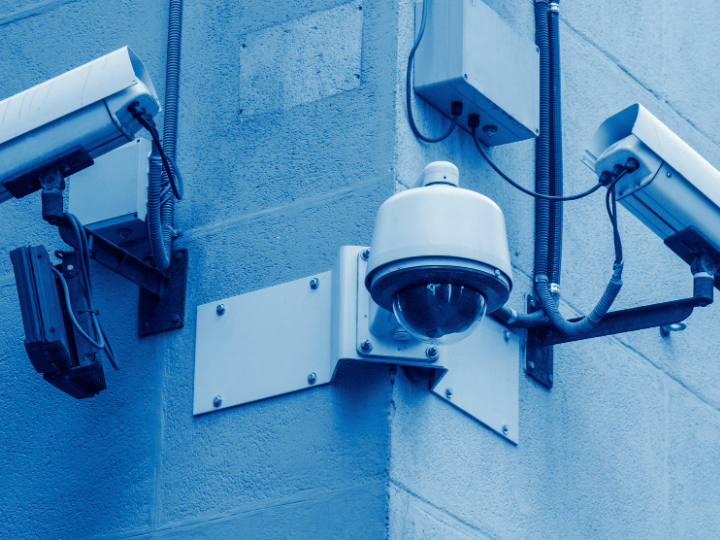
High-definition analog formats like HD-TVI, HD-CVI, and AHD send sharp, high-resolution video over the same coaxial cable older systems used, so a business can get a clear picture without the full rewire an IP system often requires.
Running new cable is often the most expensive and disruptive part of a camera project, which is why a building with existing coax can upgrade its analog cameras far more cheaply than pulling network cable for a full IP system.
IP cameras reach higher resolutions and add analytics such as loitering and license-plate detection that analog largely cannot, so a site that needs to read detail at distance or cover a large area with fewer cameras is better served by IP.
Every camera company wants a business to buy the newest thing, and for a lot of properties that means tearing out a working analog system and replacing every camera and every cable. Sometimes that is the right call. Often it is not. Analog CCTV cameras still have a real place in commercial security, and a Connecticut business sitting on a working coax system does not always need to throw it away. Mammoth Security Inc. installs and services both analog and modern camera systems across Connecticut and Massachusetts, from its New Haven office and additional locations including New Britain, and it gives honest advice about which one a building actually needs.
Analog CCTV, short for closed-circuit television, is the older camera technology that sends video over coaxial cable to a digital video recorder, or DVR, rather than over a computer network. For decades it was the standard for commercial surveillance, and millions of buildings still run it. The rise of IP cameras, which send video over a network, has led many to write analog off entirely, but that verdict is too simple. The right question is not which technology is newer; it is which one fits the building, the budget, and the goal.
The strongest case for analog CCTV is a building that already has coaxial cable in the walls. Running new cable is often the most expensive and disruptive part of a camera project, and a business with existing coax can upgrade its cameras and recorder without tearing open ceilings and walls to pull new wire. Modern analog is not the grainy analog of twenty years ago, either. High-definition analog formats such as HD-TVI, HD-CVI, and AHD send sharp, high-resolution video over that same existing coax, so a business can get a clear picture on the cable it already owns. For a Connecticut property looking to improve its cameras without a full rewire, that path is both faster and cheaper.
Budget is the second case. Analog systems generally cost less than a comparable IP system, both in hardware and in installation, which matters for a small business, a simple site, or a property that needs reliable coverage without enterprise features. A simple building with a handful of cameras watching entrances and a parking lot may not need the analytics and scale that an IP system brings. For that property, a well-designed analog system delivers the coverage it needs at a lower cost, and the money saved can go toward more cameras or better placement rather than a technology it will never use.
Analog systems are also simpler, and simplicity has value. An analog camera sends its video down a coax cable to a DVR, with no network configuration, no IP addressing, and no bandwidth to manage. For a business without dedicated technology staff, that simplicity means fewer things to go wrong and a system that keeps running without attention. A DVR recording a set of analog cameras is a proven, stable setup that many Connecticut businesses have relied on for years, and reliability is worth as much as any new feature.
Analog has real limits, and an honest installer names them. IP cameras reach higher resolutions than analog, so a site that needs to read faces or license plates at distance, or to cover a large area with fewer cameras, is better served by IP. IP systems bring video analytics, the software that flags motion in a zone, detects loitering, or reads a license plate, which analog largely cannot. IP scales more cleanly across many cameras and multiple sites, and it integrates more readily with access control and modern video management. A business that needs those capabilities should invest in IP rather than stretch analog past its limits.
The honest answer for many Connecticut businesses is a mix or a staged plan. A building can keep a working analog system where it does the job and add IP cameras where the higher resolution or analytics matter, or plan a gradual migration that spreads the cost over time rather than replacing everything at once. Mammoth Security designs that kind of practical path rather than pushing a full rip-and-replace on a business that does not need one. The goal is the coverage the building needs at a cost that makes sense, not the newest technology for its own sake.
A business already running analog CCTV needs a company that will service it, not just one that wants to sell a replacement. Cameras fail, a DVR fills up or ages out, and coverage gaps appear as a building changes. Mammoth Security services existing analog systems, repairs and replaces cameras, upgrades recorders, and extends coverage, so a business gets more life out of the system it has before facing a full replacement. When the time does come to move to IP, the same team that maintained the analog system plans the migration.
What a Connecticut business really needs is a commercial security installer that recommends the right system rather than the most expensive one. Mammoth Security is a licensed Connecticut security and low-voltage contractor with four locations and more than 5,000 buildings secured, and its in-house W-2 technicians install and service analog and IP systems alike. That range lets the company give straight advice: keep the analog where it fits, move to IP where it matters, and design the path that serves the building and the budget.
Most real decisions about analog CCTV are not all-or-nothing, and the smartest plan is often a staged one. A business can keep its working analog cameras where they cover the job, add IP cameras at the spots that need higher resolution or analytics, and migrate the rest over time as budgets allow. A hybrid recorder can run both analog and IP cameras together, so a property does not have to abandon its existing coverage the day it adds a new camera. That staged approach spreads the cost over years instead of forcing a single large replacement, and it keeps the building protected the whole way through. Mammoth Security designs these mixed and phased systems around what a Connecticut business can spend and what its coverage actually requires, rather than pushing the largest project it can sell.
An up-to-date analog CCTV system is more capable than the reputation suggests. High-definition analog cameras deliver sharp video, infrared models see in the dark, and weatherproof housings handle Connecticut's outdoor conditions. The DVR at the center records the cameras, retains footage for the days a business needs, and allows remote viewing so an owner can check the cameras from a phone. For many small and mid-size Connecticut businesses, that package covers everything the property needs, entrances watched, a parking lot recorded, footage available when an incident happens, at a cost well below an enterprise IP system. The point is not that analog is better than IP; it is that the right system is the one that matches the building, and for a lot of buildings that is a well-designed analog or hybrid setup.
The most valuable thing a business can get from a camera company is honesty about what it actually needs. A company that sells only IP systems has every reason to call a working analog setup obsolete, whether or not that is true. A company that installs and services both analog and IP has no stake in the answer and can give straight advice: keep the analog where it fits, upgrade to high-definition analog over the existing coax where a better picture is enough, and move to IP where resolution, analytics, or scale genuinely require it. Mammoth Security works across all of these, so its recommendation reflects the building rather than a product line. For a Connecticut business trying to spend wisely on cameras, that neutrality is worth as much as the technology itself, because it means the money goes toward coverage that matters instead of a replacement that does not.
In the end, the right camera system is the one that protects the building for the money the business can spend, and for many Connecticut properties that is a well-designed analog or hybrid setup rather than a full IP replacement. Mammoth Security installs, upgrades, and services all of it, and gives the honest guidance that helps a business choose well.
An older analog system is not automatically a problem to replace; often it is an asset to build on. A business that starts from what it already owns, and works with a company willing to service and extend it, spends less and gets exactly the coverage it needs.
For a Connecticut or Massachusetts business weighing whether to keep, upgrade, or replace its cameras, the starting point is a free on-site assessment. To get honest guidance on analog CCTV cameras and the right path forward, contact Mammoth Security Inc. at (860) 532-6714 for a no-obligation written quote.
Redirect to:
|
This page is a redirect. The following categories are used to track and monitor this redirect:
|