

The Science Behind Dreams: How Your Brain Creates and Interprets Them
Dreams have fascinated humanity for millennia, inspiring awe, fear, and wonder. Across cultures and history, dreams have been believed to hold messages from the divine, glimpses of the future, or manifestations of the subconscious mind. In this article, we will delve into the science behind dreams, exploring how your brain creates and interprets these enigmatic nocturnal experiences.
The Brain’s Dream Theater
Before we can decipher the mysteries of dreams, we must understand the neurobiology of sleep. Sleep is a complex phenomenon, divided into Non-Rapid Eye Movement (NREM) and Rapid Eye Movement (REM) phases. During REM sleep, the brain becomes highly active, resembling wakefulness in terms of electrical patterns, but the body remains paralyzed.
Researchers have identified key brain regions involved in the sleep-wake cycle. The brainstem and thalamus play crucial roles in sleep regulation, while neurotransmitters such as serotonin, norepinephrine, and acetylcholine modulate the transitions between sleep stages. Interestingly, the limbic system, responsible for processing emotions, also contributes to the vivid emotional experiences in dreams.
Unraveling the Dreaming Process
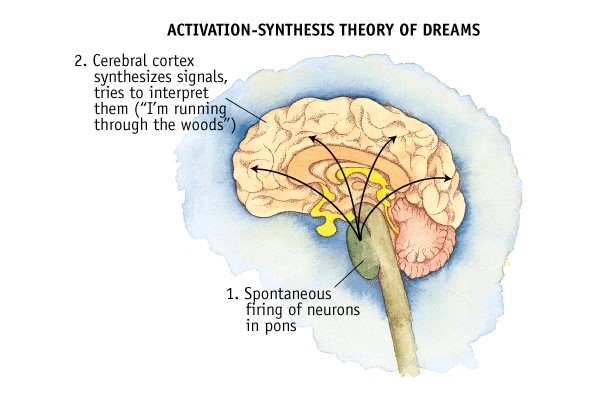
The activation-synthesis hypothesis, proposed by psychiatrist J. Allan Hobson and Robert McCarley, is one of the pioneering theories explaining dream creation. According to this hypothesis, dreams result from the brain’s attempt to make sense of random neural activity during REM sleep. It suggests that dreams are not meaningful messages but merely a byproduct of the brain’s internal chatter.
Recent developments in dream research have challenged the activation-synthesis hypothesis. Some neuroscientists propose that dreams serve essential functions, such as emotional regulation and memory consolidation. The involvement of the prefrontal cortex, responsible for decision-making and self-awareness, is also crucial in dream control and lucid dreaming experiences.
The Dream Content Universe
Dream content varies widely among individuals, but certain common themes emerge. Flying, falling, being chased, and appearing naked in public are some recurring dream scenarios. The interpretation of dream content has intrigued psychologists, anthropologists, and religious scholars for centuries.
Personal experiences and memories significantly influence dream imagery. Cultural factors also play a role in shaping dream symbolism and interpretation. For instance, while snakes might represent transformation in some cultures, they might symbolize danger in others. Nightmares and recurring dreams often signal unresolved fears and anxieties, which could be addressed through self-reflection and therapy.
Interpreting Dreams: Science or Art?
Sigmund Freud, the father of psychoanalysis, introduced dream analysis as a means to explore the unconscious mind. Freud believed that dreams contain hidden desires and repressed thoughts, serving as a window to our deepest wishes and fears. However, this theory has received criticism and is considered subjective and open to interpretation.
Carl Jung, a Swiss psychiatrist, proposed an alternative approach to dream interpretation. He emphasized archetypes, universal symbols and themes that transcend cultures and time periods. Jung believed that dreams offered insight into the collective unconscious, connecting individuals to the broader human experience.
Combining neuroscience and psychology, modern researchers attempt to bridge the gap between science and the subjective nature of dream interpretation. Dreams are now seen as a reflection of personal experiences, emotions, and mental states. While there might not be universal dream dictionaries, exploring dream content can lead to valuable self-discovery and enhanced self-awareness.
The Link Between Dreams and Mental Health
Dreams have been associated with mental health and emotional well-being. Nightmares, in particular, can be distressing and potentially indicative of underlying psychological issues. They are prevalent in conditions such as post-traumatic stress disorder (PTSD), and studying their content can aid in therapeutic interventions.
Research has shown that dreams can assist in emotional processing and help individuals cope with difficult life events. Dream therapy, also known as dreamwork, involves analyzing and exploring dreams to gain insights into one’s emotional state and current life challenges. By addressing dream themes and emotions, individuals can find relief and healing.
Unusual Dream Phenomena
While most dreams are relatively ordinary, some individuals experience sleep disorders that influence their dream experiences. Sleepwalking, or somnambulism, occurs when a person performs complex actions during sleep, often with no memory of it upon awakening. Night terrors, on the other hand, are intense episodes of fear and agitation during sleep, commonly affecting children.
Lucid dreaming is a unique state in which the dreamer becomes aware of the dream and may gain some control over the dream narrative. Some individuals practice techniques to induce lucid dreaming, offering opportunities for creativity and self-exploration within dreams.
Dreaming across Species
While we often think of dreams as a human experience, research suggests that other animals also dream. Observations of sleeping animals show rapid eye movements and brain activity patterns resembling REM sleep in humans.

For example, mammals like dogs and cats exhibit signs of dreaming, often twitching or making noises as they sleep. The significance of dreaming in other species remains an area of ongoing investigation and debate.
Future Frontiers in Dream Research
Advancements in brain imaging technology have opened up new avenues for dream research. Functional magnetic resonance imaging (fMRI) and electroencephalography (EEG) allow scientists to study brain activity during sleep and dreams with greater precision.
Computational models of dreaming have also emerged, utilizing artificial intelligence algorithms to simulate dream content and explore the neural mechanisms underlying dream formation. However, ethical considerations surround the manipulation and recording of dreams, as well as the potential impact on privacy and personal autonomy.
Conclusion
Dreams remain one of the most fascinating aspects of human experience. While science has made significant strides in understanding the brain’s role in dream formation, the interpretation of dreams continues to blend the scientific and the subjective. The study of dreams offers a gateway to self-discovery, emotional healing, and potential insights into the complexities of the human mind.
As we journey further into the realms of dream science, let us embrace t you could check here he mysteries that continue to unfold, recognizing that dreams are not only a product of our brains but also a window into the depths of our souls.

Greetings and welcome to my world of dreams, healing, and profound self-discovery. I am Dr. Evelyn Rivers, a passionate advocate of the extraordinary realm of dreams and a dedicated psychologist specializing in dream analysis and emotional/spiritual healing. Read more